
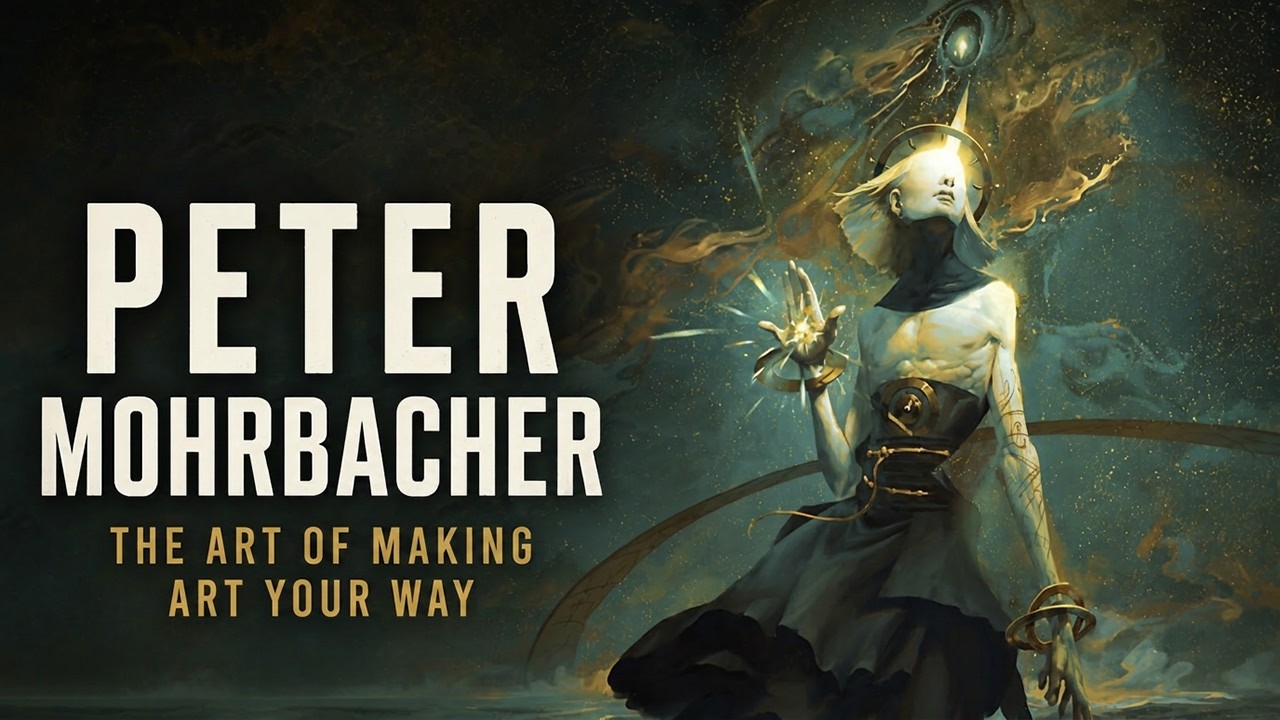
Digital Painting Secrets | Peter Morbacher | EP 248
Key Takeaways
Gradient maps unlock unexpected color palettes — experimenting with random, "ugly" gradients and adjusting them reveals possibilities you wouldn't discover through intentional color choices alone.
Critique should draw answers out, not impose them — the most effective teaching asks questions about the artist's experience rather than correcting technical mistakes.
Convention artist alleys have exploded from 50 to 500+ booths — what was once a sideline is now the main attraction as fans seek face-to-face connections with creators.
Fashion photography pushes further than most concept art — real-world fashion designers working with physical materials often create bolder, more extreme silhouettes than digital artists.
Independent artists can earn more than commercial work — through Kickstarter, Patreon, and direct sales, one artist made $12,000 in his first 30 days with existing portfolio pieces.
Most digital artists guard their process like a secret recipe. Peter Morbacher gives his brushes away for free.
The celebrated digital painter behind the Angelarium project has spent a decade proving that technical tricks matter far less than understanding your creative process. He's worked with Magic: The Gathering, taught hundreds of students, and built a sustainable independent career without a single employer.
In this conversation, you'll learn how gradient maps can transform a painting in seconds, why fashion photography beats concept art for reference, and how asking the right questions unlocks more growth than correcting mistakes. Whether you work digitally or with ink and skin, his approach to composition, gesture, and creative authenticity applies directly to your work.
This episode of the Fireside Tattoo Network podcast was made possible thanks to the Paradise Artist Retreat
Meet Peter Mohrbacher: From Game Studios to Independent Success
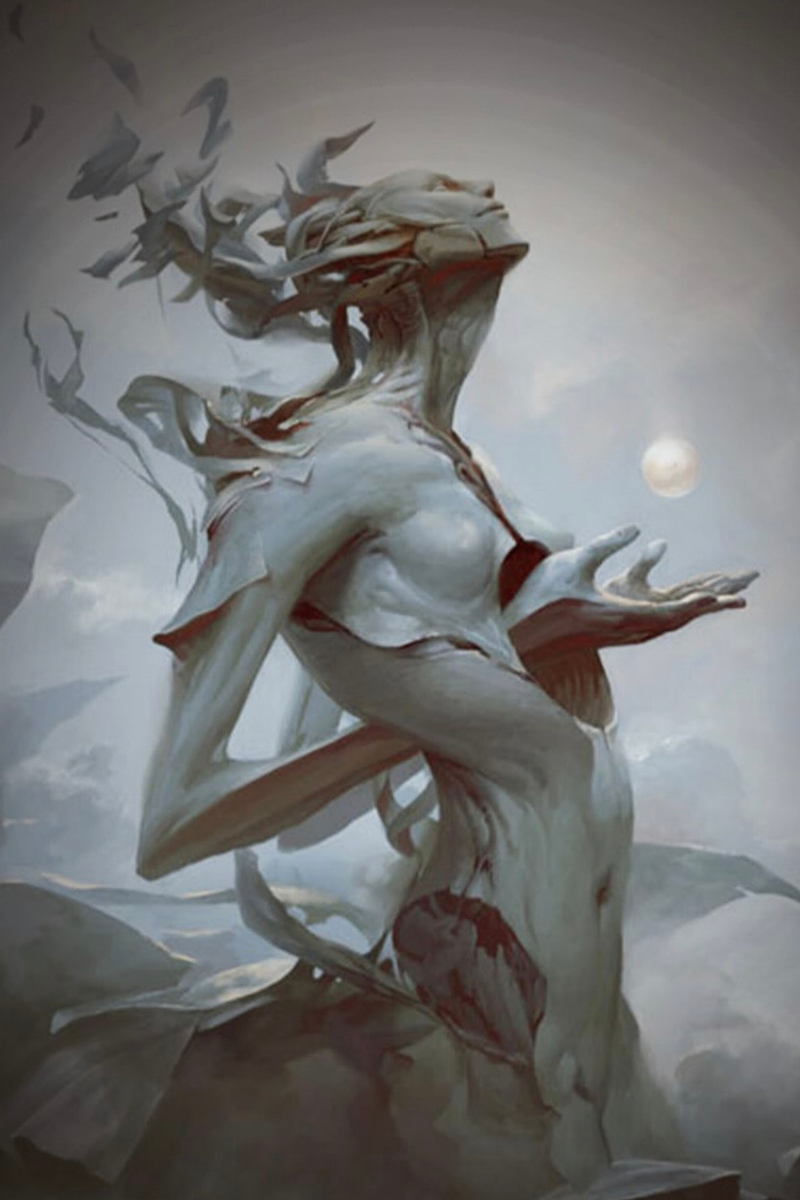
Peter Mohrbacher is a digital painter, character designer, and creator of the Angelarium project. He's worked with major companies including Magic: The Gathering and various game studios before transitioning to full-time independent work.
His work focuses on symbolic, mythology-inspired digital paintings that personify abstract concepts through striking visual metaphors. He teaches online workshops and mentorship programs, specializing in helping artists discover their unique creative voice.
Please enjoy!
How Artist Alleys Became the Main Attraction at Conventions
The convention landscape has transformed dramatically over the past decade. What started as 50 artist tables has exploded into massive artist alleys with 500+ booths taking up half of convention centers.
Peter explains the shift: "Back in the day conventions used to be about you go to a convention and you get see all the stuff that you would never be able to see in a store. Bootleg DVDs, soundtracks for foreign movies, like all kinds of merchandise and media that you just absolutely would never see in your hometown."
But the internet changed everything. Once people could order anything from anywhere, vendor booths lost their appeal. Many now sell cheap merchandise, 3D prints downloaded for free, or whatever catches eyes.
Artists became the main draw because they offer something you can't get at home: face-to-face connections. Meeting creators in person, seeing original work in print rather than scrolling past it in a tenth of a second — these experiences became valuable precisely because they're not digital.
The downside? Competition increased tenfold. Peter recalls: "Those years were the easiest years ever for being a working artist. I was telling everybody these jobs, this freelance, all sucks. You have to come out, see these conventions. And I wish I'd kept my mouth shut because nowadays it's 10 times as many artists at these things."
Still, conventions remain essential for independent artists. Many don't run online shops and rely on these events to connect with fans and make sales.
Here's what's changed about the convention economics:
From Video Games and Anime to Professional Digital Artist
Peter's path into art started later than most professionals. He didn't draw his whole childhood — he woke up at 16 and decided he wanted to do it.
"I always struggled with socializing with people and making friends and I didn't know how to get good attention from my peers," Peter shares. "All of a sudden when I was doing this thing people were interested in what I was doing, interested in me, and it became this bridge for me to connect with people."
Art became more than a career path. It was a way to build relationships, to find common ground with people who shared his interests in video games and anime.
He attended art school, though he doesn't credit it with much: "I went to the world's worst art school. It doesn't exist anymore because it got sued out of existence by the federal government." The school was apparently mishandling student loans and eventually shut down.
Peter considers himself "peer taught" rather than self-taught. He learned digital painting and drawing through online communities, particularly DeviantArt when it was the center of the digital art universe.
His formal education gave him basic color theory and drawing fundamentals in one semester, but most of his actual skills came from conversations with other artists and active participation in online art communities.
This peer-learning approach would later influence his entire teaching philosophy.
Making $12,000 in 30 Days: The First Kickstarter
Peter had been making personal work alongside his commercial career for years. He attended conventions, sold prints, and built a following — all while working full-time.
The turning point came when a friend ran a Kickstarter selling prints of a single painting. The friend wasn't known, didn't have commercial work or a big following. Yet he made around $1,200 from one image.
Peter realized: "If the worst case scenario is $1,200 and I have more advantages than he does, I'm going to see what happens."
His first campaign featured existing portfolio pieces and Magic: The Gathering work. No new paintings, just stuff he already had. In 30 days, he raised around $12,000.
"It's not life-changing money, but it covers the bills," Peter notes. "For 30 days in sales straight out of the gate with no momentum behind it, I was more than satisfied. It made me think that the whole thing would work in the end."
Shortly after, he was fired from his mobile game company job. He admits he wasn't suited for employment: "I want to be in the guts of how things work when I'm a part of a business. I ask a lot of questions and I tend to speak out of turn a lot. It's a good habit for an entrepreneur to have and just not well suited to be an employee."
With savings as a cushion and proof that Kickstarter worked, he moved back to Chicago to try making a full-time living from Kickstarters, Patreon, a web store, and online teaching.
Within a couple months, he was earning enough to support his family of four. He had given himself two years to make it work, but his prior experience shortened the timeline dramatically.
For many years after, he ran with a significant surplus beyond covering his needs, operating a genuinely successful business as an independent artist.
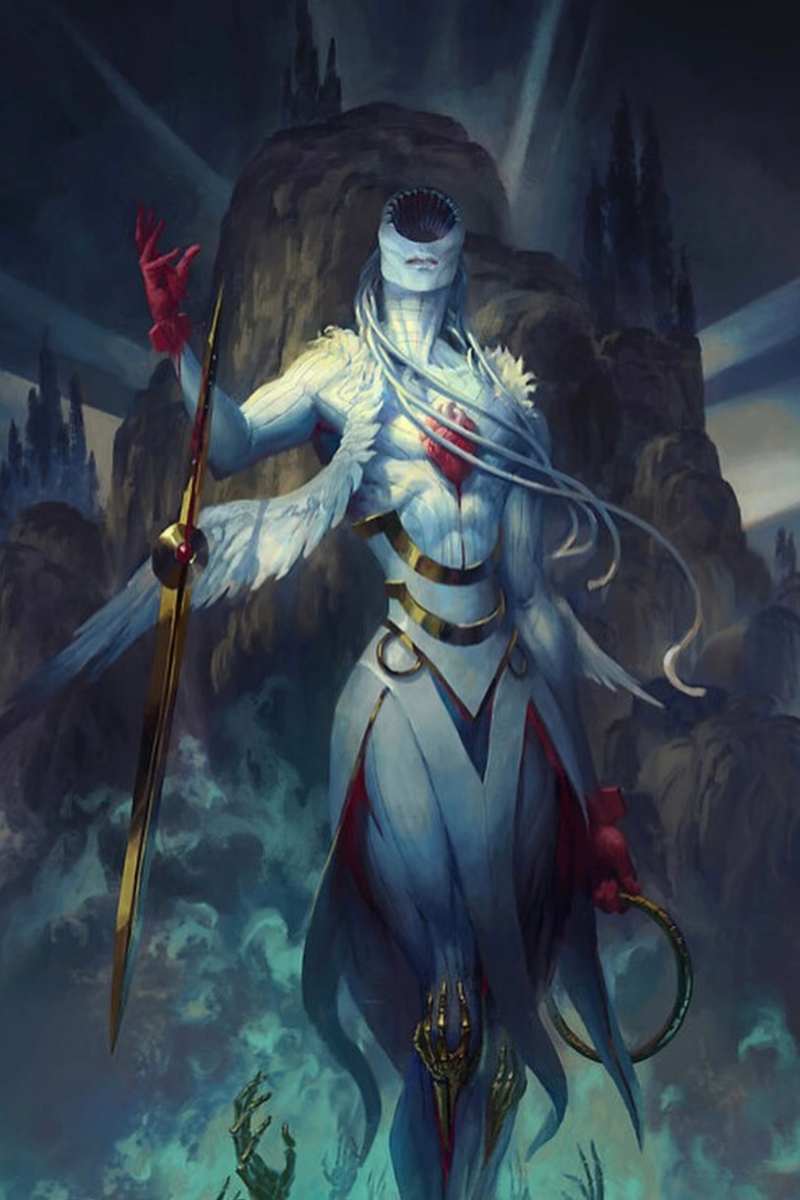
The Angelarium Project: Personifying Ideas Through Angels
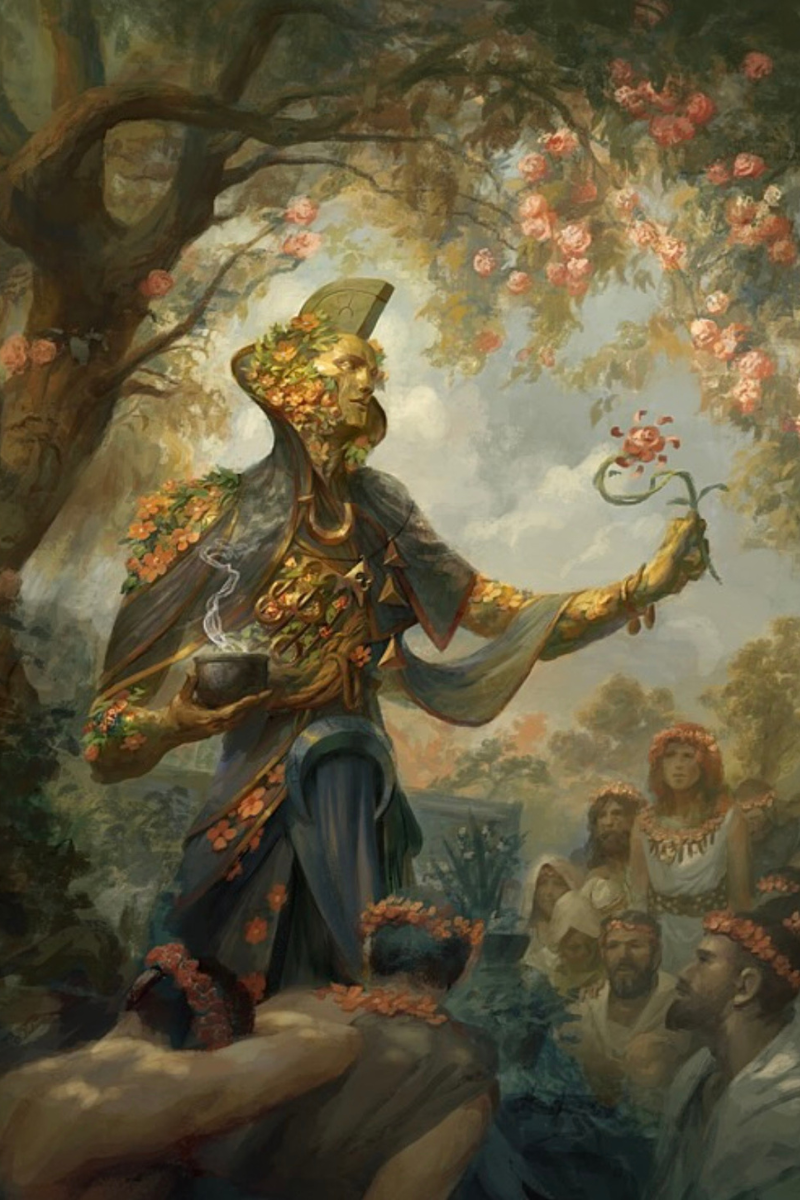
Angelarium started as a college project and evolved into Peter's signature body of work. A friend had an angel encyclopedia, and Peter was fascinated by the long list of names with minimal information about each one.
"I just found them really useful art prompts," Peter explains. "I just had an easy time coming up with ideas based on them."
The angel names come from various mythologies and religions, but also from something unexpected: Victorian-era magicians making things up.
"There's periods in history where you have guys making up magical traditions and pulling a lot of the stuff out of their ass," Peter says. "Some Victorian magician just wrote them all down and made it seem like there was an ancient tradition, but he was just making stuff up."
This creates a perfect creative space — a facade of magical tradition with nothing behind it, leaving room for artists to do whatever they want.
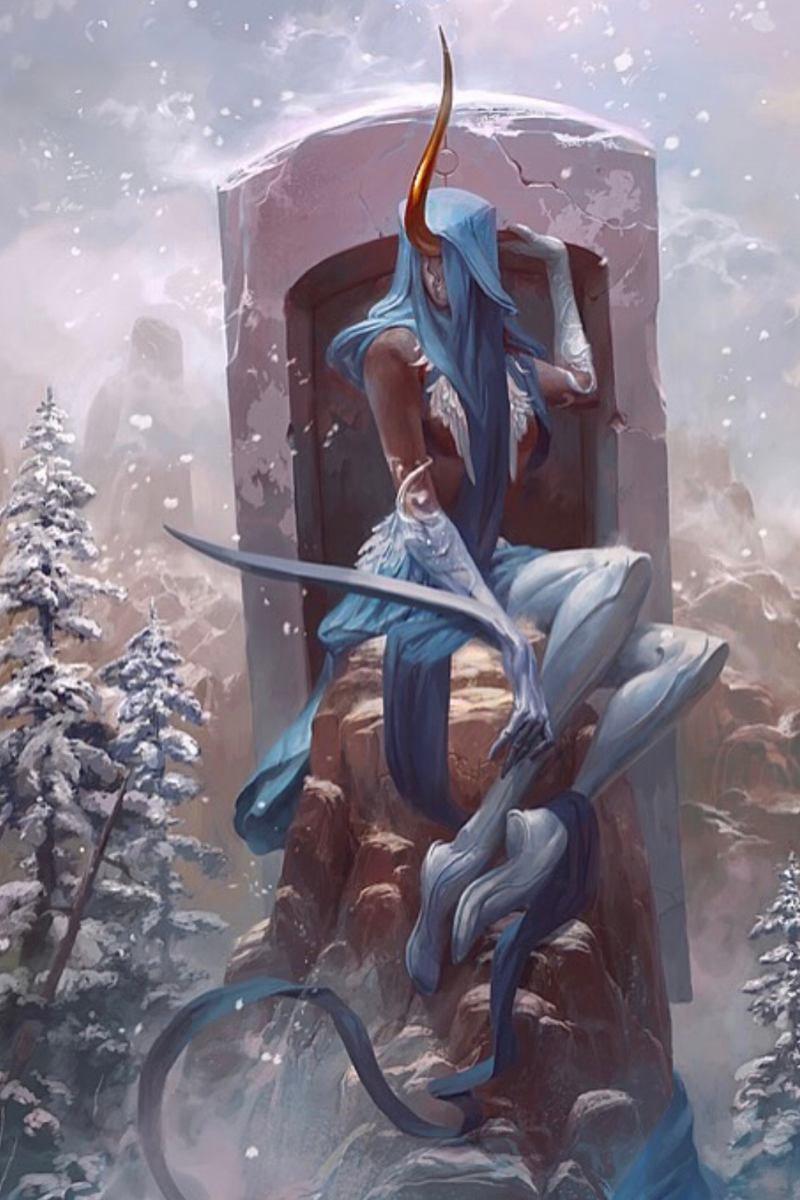
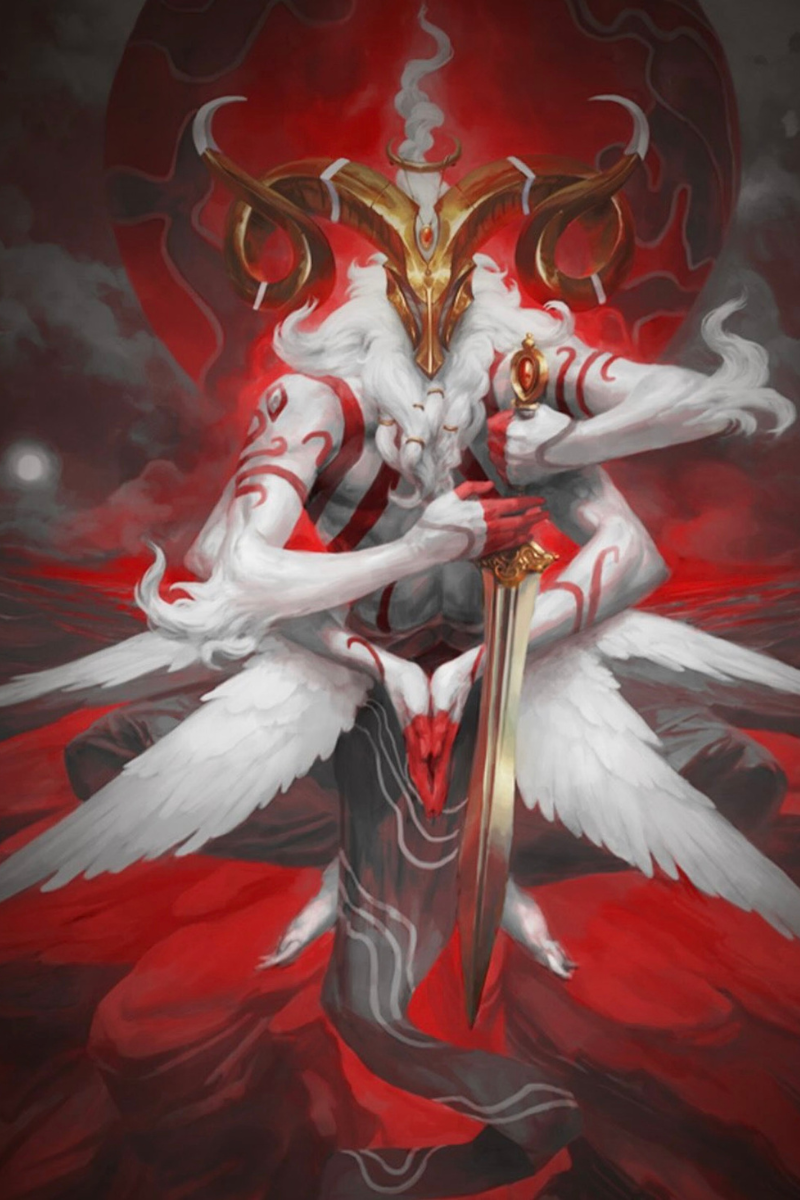
Peter doesn't think of his angels as characters with personalities or deep lore. They're elemental, symbolic representations: "When I'm coming up with one of these, I'm not thinking about some sort of deep lore or story. It's more just figuring out ways of personifying my associations with whatever the domain of the angel is."
"Personifying ideas as angels is just as easy as any other sort of polytheistic way of interpreting the world." — Peter Mohrbacher
He's now working on a world-building project to create a Dungeons & Dragons version of Angelarium, trying to make these themes more interactive without reducing everything to "angel politics," which he finds boring.
The project became the best part of his portfolio and the thing that consistently got him work, even though he was initially scared to make it his main focus as an independent artist.
Why Most Art Critiques Miss the Point
Peter's approach to teaching and critique breaks from the standard model. Most portfolio reviews follow a familiar pattern: an instructor points out tangents, anatomy errors, and fundamental mistakes.
"They'll say, 'Well, that's a tangent. These two things aren't really overlapping. They're just kind of touching. You're not supposed to do that.' Or they'll say, 'Oh, you got the anatomy on this wrong. The legs are too short,'" Peter describes.
Everyone accepts this as helpful, but Peter felt it wasn't adding up to the experience people actually needed.
When he started doing one-on-one mentorship, he actively avoided technical corrections and drawing-over demonstrations. Instead, he focused on conversations about the artist's experience with their work.
His critique method centers on asking questions:
Which pieces do you like and which don't you like?
What was positive about the experience while working on this?
What would you want to see better?
What's frustrating to you?
"It's just like a therapy session," Peter admits. "I'm just asking them to talk about themselves. Through that, I'm hoping to reveal to them the places where they're making choices and maybe not realizing it."
The goal is to help artists see themselves more clearly. They're too close to their own work to recognize what's unique about their creativity.
"My goal when I'm giving critique is to try to stand back at a distance and see if I can reflect back to people the things that I'm seeing in them so they can see themselves more clearly." — Peter Mohrbacher
Some students resist this approach. They want secret knowledge from outside themselves, waiting for Peter to give them answers. But others quickly trust the process and transform from struggling early-career artists to professionals.
The challenge? This method doesn't scale well. Watching someone else go through it is "like listening to somebody else's dream journal" — tedious and boring. It only works in intense one-on-one conversations.
Peter hasn't figured out how to broadcast this experience effectively, but for students willing to engage with it directly, the results speak for themselves.
Gradient Maps: The Secret to Unexpected Color Palettes
Peter's color process relies heavily on gradient maps, a technique that lets him discover color palettes he'd never choose intentionally.
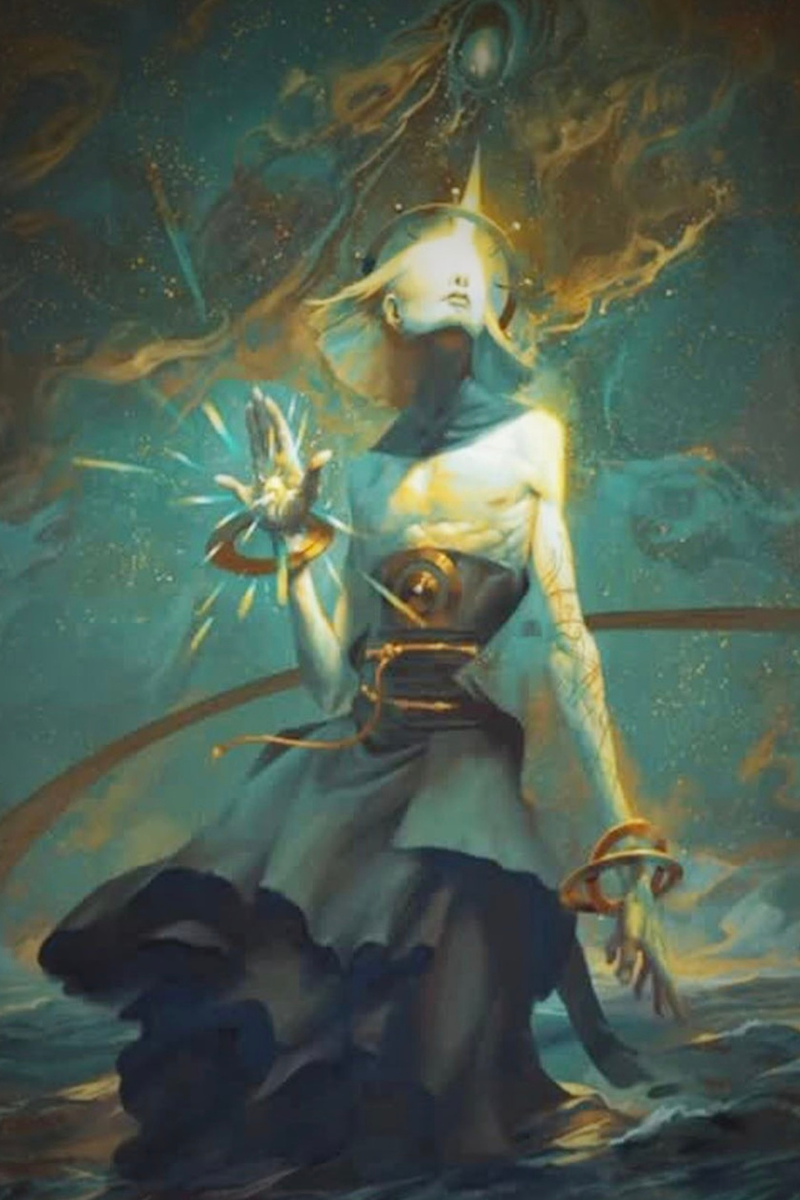
He starts paintings in grayscale, establishing values and composition. Then comes the gradient map experimentation: "The gradient maps are so unpredictable that a lot of the process was taking some random super ugly broken gradient map and just pulling the handles around and seeing what happened."
He uses old Photoshop defaults — weird, random, cheesy effects — and changes blending modes while moving sliders around. The screen flashes through psychedelic colors until something interesting emerges.
"The game was always trying to look past what was on the screen and seeing the potential in what was happening," Peter explains. "Seeing what was changing from the original and what potential in that was something that you could try to capture a piece of and bring forward to the next step."
This isn't something easily demonstrated. In time-lapses, it looks like random flashing colors that suddenly resolve into a finished painting. There's no clear moment where he can say, "I made this specific choice."
He saves successful gradients from finished paintings to build a custom library. Instead of just Photoshop defaults, he has a collection of gradients that worked in previous pieces, which he can reuse and modify for new work.
He shares these custom gradients for free online, along with his brushes, because his process doesn't rely on proprietary tools. His advantage comes from the decision-making process, not the software settings.
For tattooers, Peter notes: "If a tattooer wanted to do this sort of stuff, they just need to do it in Procreate or Photoshop or whatever and then figure out how to bring that" to the skin. Apps now exist that can translate color palettes into specific ink brands.
Why Fashion Photography Beats Concept Art for Reference
Peter's reference folder contains an unusual mix: fine art, illustration, design, photography, and a heavy emphasis on fashion photography.
"Fashion editorial has to solve the same problems that I do, but they end up doing it physically," he explains. And here's the surprising part: "High fashion ends up being more extreme than character design."
Concept artists might add fantasy shoulder pads and wrist braces and call it done. Meanwhile, Alexander McQueen is physically sewing feathers to fabric and creating bolder, more ambitious silhouettes.
Peter's knowledge came from an unlikely source: working on a modern-day mobile game that featured fashion. The company hired a fashion consultant, and while the game developers weren't personally interested in fashion trends, the information stuck.
Now when teaching character design, he finds students often don't know basic garment construction: "I'm like, 'Hey, the waistline on those pants is crazy.' And they're like, 'I don't know how a waistline is supposed to go, right?' I'm like, or what an inseam is."
Understanding basic fashion terminology and silhouettes is essential for drawing clothed figures. Waistlines shift from high to low and back again over decades. In the '90s, low-rise jeans dominated. Twenty years later, comic artists were still drawing women in low-rise jeans, and every woman looking at comics thought it looked ridiculous and outdated.
Peter emphasizes: "If you're going to do concept art, you're going to be drawing people that wear clothes, you should know the most basic things about it."
He doesn't subscribe to Vogue or follow fashion trends actively. His knowledge is roughly at a first-year fashion student level. But that basic awareness makes an enormous difference in character design work.
The Manual Digital Painting Process: Finding Every Edge
Peter works unusually manually for a digital artist. He doesn't use many efficient techniques or shortcuts, preferring to touch every part of the painting by hand.
"Maybe it's a sort of laziness to not learn more efficient techniques, but I think there's something about the final result that feels more hand touched by just touching it by hand," he says.
His process starts with gesture. He draws on 11x14 paper in pencil, using big sweeping lines to find the overall gesture of the figure. Starting small stiffens everything up, so he prioritizes gesture and concept over detailed planning.
When he scans and brings the sketch into Photoshop, much is still undrawn or drawn poorly. That's when he figures out the value pattern and composition — what most artists do in thumbnails, he improvises in broad strokes in Photoshop.
His approach is general to specific. Everything becomes a series of questions:
Am I doing light on dark or dark on light?
Is there a light that gradates across the form from top to bottom or bottom to top?
How much overlap creates which edge quality?
"Everything's a gradient and every edge is just a certain amount of overlap," Peter explains. "Once you start seeing all of the tools that you have available to you, it's not as creative, but you start to figure out if I want to accomplish a certain mood for this piece, well, what paintings or photographs do I have in my reference folder that have that mood?"
The finishing process is exhaustive. He uses a single flexible brush to scrub over every inch of the painting, deciding whether each edge should be firm, smooth, or somewhere in between.
"It's a really time-intensive process to go and figure out how defined every edge is over the course of a big painting. It often takes me 20 hours to go through an entire painting, one brush stroke at a time." — Peter Mohrbacher
The challenge is maintaining focus so you don't over-render everything and flatten the interest across the whole piece. Creating attention through contrast — defining where the most contrast exists — remains fundamental across all visual arts.
Teaching at Paradise Artist Retreat: What to Expect
Peter will be teaching at the Paradise Artist Retreat in October at Jiminy Peak, alongside David Cheifetz and Jennifer Gennari.
His workshop will cover the digital painting process, including tricks with gradient maps, blending modes, and compositional problem-solving. But his deeper focus remains on the creative process itself.
"I want to talk about the soul of the work and what ultimately ends up informing every one of the flashier steps that comes afterwards," Peter explains. "Talking to people about making their own original work and talking about where that originality comes from is a deep interest of mine."
He gets more excited about helping people discover their own path through art than demonstrating his specific route. But he's not shy about sharing tools and techniques, especially because his manual approach carries over between programs and mediums.
"The way that I work is just about as applicable for working in acrylic and it also works across every digital painting suite," he notes. Whether you work in Procreate, Clip Studio Paint, Krita, or Photoshop, the principles remain consistent.
Peter is particularly looking forward to one-on-one conversations with attendees about their work. The intimate setting at Paradise — a ski resort with no snow, essentially taken over by tattooers — provides the perfect environment for these meaningful exchanges.
Attendees will get both a longer-form workshop and a main stage presentation accessible to everyone at the retreat.
Frequently Asked Questions
Q: Does Peter Mohrbacher work traditionally or digitally?
A: Peter has always worked digitally, though he's experimented with traditional oil painting at conventions. His entire professional process is built around digital painting in Photoshop, and he considers his traditional work more of a curiosity than his main practice.
Q: How did Peter Mohrbacher transition from commercial work to independent art?
A: He ran his first Kickstarter while still employed, raising $12,000 in 30 days from existing portfolio work. After getting fired from a mobile game company, he moved to Chicago with savings and within months was earning enough from Kickstarters, Patreon, web sales, and teaching to support his family of four.
Q: What is the Angelarium project?
A: Angelarium is Peter's ongoing series of paintings personifying angel names from various mythologies and invented magical traditions. Rather than telling stories about angel characters, he uses the names as prompts to create symbolic, elemental representations of ideas and associations.
Q: What makes Peter Mohrbacher's teaching approach different?
A: Instead of correcting technical mistakes, Peter asks questions about the artist's experience with their work — what they liked, what frustrated them, and what they hoped to achieve. He aims to reveal to artists the unconscious choices they're making and help them see their own creativity more clearly.
Q: What are gradient maps and how does Peter use them?
A: Gradient maps apply color palettes to grayscale paintings. Peter experiments with random, "ugly" Photoshop defaults and adjusts them until unexpected, interesting color combinations emerge. He saves successful gradients from finished paintings to build a custom library for future work.
Episode Timestamps
[00:00] Introduction and convention culture discussion
[08:15] Peter's early art background and peer learning
[18:30] First Kickstarter success and going independent
[25:45] The Angelarium project origins and philosophy
[32:20] Critique methodology and teaching approach
[42:10] Gradient maps and color process
[48:30] Fashion photography as reference for character design
[54:00] Manual digital painting workflow
[01:02:15] Paradise Artist Retreat workshop details
Notable Quotes
"Art became this bridge for me to connect with people. When people talk about art being a way that people connect, I think we think about it in this really esoteric way, but for a teenager who's maybe a little autistic, it's like a really realistic thing."
— Peter Mohrbacher, on discovering art as a way to socialize
"I want to be in the guts of how things work when I'm a part of a business. I ask a lot of questions and I tend to speak out of turn a lot. It's a good habit for an entrepreneur to have and just not well suited to be an employee."
— Peter Mohrbacher, on why he got fired
"The game was always trying to look past what was on the screen and seeing the potential in what was happening. Seeing what was changing from the original and what potential in that was something that you could capture."
— Peter Mohrbacher, on gradient map experimentation
"High fashion ends up being more extreme than character design. You'd think that the guys who are just pushing pixels around in Photoshop would go wilder, but it feels like the people who actually have to build this stuff out of fabric end up going bigger and bolder."
— Peter Mohrbacher, on fashion photography as reference
Connect with Peter Mohrbacher
Instagram: @petemohrbacher
Website: https://angelarium.shop
Mentioned in This Episode
Angelarium project
Magic: The Gathering
DeviantArt
Kickstarter and Patreon
Alexander McQueen (fashion designer)
Paradise Artist Retreat (October at Jiminy Peak) https://paradiseartistretreat.com
David Shavitz and Jennifer Jennari (fellow instructors)
Andy Chambers (tattoo artist)
Richmond Tattoo Show
Fireside Tattoo Network is a podcast exploring the art, craft, and business of tattooing through conversations with tattoo artists, painters, illustrators, and creatives from adjacent fields. Hosted by Jake Meeks, the show brings actionable insights and authentic stories from working professionals.
